
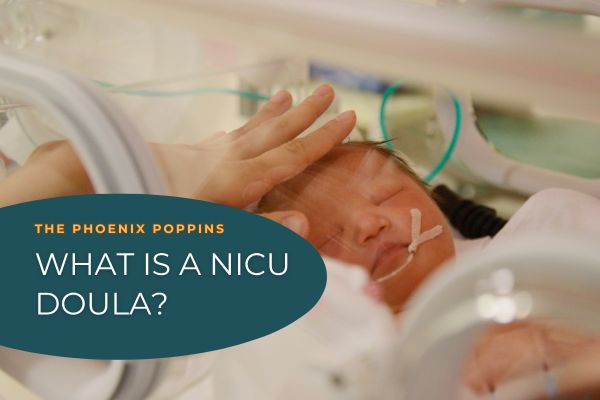
What Is a NICU Doula?
What is a NIUC Doula?
A NICU doula is someone who provides emotional, physical, and logistical support for families of preemies or other medically complex infants. She helps parents find time to process, heal, and navigate their child's medical care.

When Your Baby Is In the NICU
Nobody plans for the NICU. You don't show up to your baby shower saying, "I can't wait for weeks of beeping monitors and leaving the hospital without my baby!" You probably had a nursery ready, a birth plan written, and dreams of those first precious days at home with your newborn.
And then everything changed.
Maybe your baby arrived early. Maybe there were unexpected complications. Maybe everything seemed fine until suddenly it wasn't. However you ended up here, you're now facing a reality you never imagined - and it's terrifying.
The NICU Journey Nobody Talks About
Here's what they don't tell you: one in ten babies ends up in the NICU. This isn't some rare, freak occurrence - it's actually really common. But when you're the one watching your tiny baby through plastic walls, hooked up to wires and tubes, it feels incredibly lonely.
Your days become a blur of hospital visits, medical terminology you're frantically Googling, and that crushing feeling of helplessness as strangers care for your baby. You can't just pick them up when they cry. Sometimes you can't even hold them at all. The simple things other parents take for granted - a feeding, a diaper change, a bath - become medical procedures you might not be allowed to do.
And while the NICU nurses and doctors are absolute heroes keeping your baby alive, there's often nobody there to take care of you. Nobody asks if you've eaten today. Nobody checks if you're healing from birth. Nobody acknowledges that you're going through something incredibly traumatic while trying to pump milk, maintain some semblance of normal life, and not completely fall apart.
This is where a NICU doula comes in.
So What Exactly Is a NICU Doula?
A NICU doula is like a postpartum doula's specialized cousin. She's not a nurse or doctor - she can't adjust your baby's medications or interpret lab results. But she understands the NICU world in a way that most people don't. She knows what you're going through, what questions to ask, and how to support you through this nightmare you didn't sign up for.
Most NICU doulas focus on that absolutely terrifying moment when you transition from hospital to home. You know that moment - when you go from 24/7 medical monitoring and nursing staff to being completely on your own with a baby who might still be pretty fragile. Yeah, that moment is rough. But some NICU doulas also support families while baby is still in the hospital, helping you navigate the experience from the beginning.
What NICU Life Is Really Like
Let's talk about what you're probably feeling right now, because chances are, nobody's validated these feelings yet:
You're exhausted beyond anything you've experienced. You're scared your baby won't make it, or if they do, what kind of challenges they'll face. You feel guilty - like somehow you caused this or should have prevented it. You're grieving the newborn experience you thought you'd have. You might feel disconnected from your baby because you can't care for them like a "normal" parent.
And if you have a partner, they're probably struggling too. They watched everything happen, but nobody's supporting them. They're trying to be strong for you while falling apart inside.
If you have other kids at home, they're confused about where you are all the time and why the new baby isn't home yet.
You're probably neglecting your own postpartum recovery because your baby's needs feel more urgent than yours.
Sound familiar? This is the NICU parent experience, and it's brutal.
The Support You Actually Need
Here's where a NICU doula steps in with exactly the kind of help that makes a real difference:
She Gets It
First and foremost, a NICU doula understands your world. She knows why you're terrified to go home. She knows about the trauma of being separated from your newborn. She won't tell you to "just be grateful your baby survived" or minimize what you're experiencing with "at least" statements. She creates space for you to feel all the complicated, messy emotions without judgment.
Research shows that up to 80% of NICU parents develop symptoms of perinatal mood and anxiety disorders. The hypervigilance, the panic every time your baby makes a weird sound, the inability to sleep even when you're exhausted because you're too worried - these aren't character flaws. They're trauma responses. A NICU doula recognizes this and helps you navigate it.
She Helps You Understand Your Baby
NICU babies are different from full-term babies in ways that can be confusing and scary. Your doula helps you understand what's normal for your baby's adjusted age. She teaches you about the feeding challenges that are super common in NICU graduates - why your baby might tire easily while eating, struggle with coordination, or need special positioning.
She shows you how to handle and care for a premature or medically complex baby who might be more sensitive or fragile than the babies you see in parenting books. She helps you read your baby's unique cues and understand their development timeline, which might look nothing like what your friends with full-term babies are experiencing.
She Makes Sure You're Okay Too
NICU parents are notorious for completely ignoring their own needs. You're so focused on your baby that you forget to eat, you don't sleep even when you could, and you definitely aren't prioritizing your own postpartum healing.
Your NICU doula makes sure you're taking care of yourself - not because she's bossy, but because she knows that you can't pour from an empty cup. She prepares meals so you actually eat something nutritious. She encourages you to rest when the baby's sleeping instead of watching them breathe. She checks in on your emotional state and recognizes when you might need professional mental health support.
Studies show that NICU mothers with doula support are much more likely to attend their own postpartum medical appointments - we're talking 11 days after discharge versus 31 days for those without support. That's huge when we're talking about catching postpartum complications or depression early.
She Supports Your Feeding Journey
Feeding a NICU baby can be incredibly challenging. Many can't eat by mouth right away, so you're pumping constantly to build a supply for a baby you might not even be able to nurse yet. Or maybe you're combination-feeding, exclusively pumping, using formula, or doing all of the above, depending on the day. She can even help if your baby develops a bottle aversion or might need an NG or G tube for feeding.
Your doula helps you navigate whatever feeding journey you're on without judgment. She knows about the specific challenges NICU babies face - the difficulty coordinating sucking, swallowing, and breathing, or the way some babies get so tired they fall asleep mid-feed. She can help troubleshoot problems and connect you with lactation specialists who understand preemies.
She Bridges the Terrifying Gap to Home
Let's talk about discharge, because this is where NICU doulas become absolutely essential.
Parents consistently describe NICU discharge as "frantic" and "chaotic." You wait for weeks or months, constantly asking, "when can we go home?" Then suddenly, sometimes with only 48 hours notice, they tell you your baby's ready. And you panic.
You go from a team of medical professionals watching your baby's every breath to being completely alone in your house with a baby who still feels fragile. The monitors are gone. The nurses are gone. The safety net disappears overnight.
Common thoughts after bringing a NICU baby home:
"What if they stop breathing and I don't notice?"
"I'm too scared to leave the house with them"
"Everyone expects me to be happy, but I'm terrified"
"I don't know who I am anymore after this experience"
"Nobody understands how hard this is"
Your NICU doula helps you through this transition. She provides the practical support - helping with baby care, teaching you about medications or equipment if needed, preparing meals, handling laundry. But more importantly, she provides emotional support during what might be the scariest time of your life.
She helps you build confidence in your ability to care for your baby without the NICU staff. She teaches you what to watch for and when to call the doctor versus when something is just normal NICU graduate stuff. She's there when you have a middle-of-the-night panic about whether your baby is breathing okay.
She Helps Your Whole Family Heal
Your partner has been through this too, but probably nobody's acknowledged it. They need support processing their trauma, finding their role, and learning how to care for baby. Your NICU doula includes them in the support.
Your older kids need help understanding what happened and connecting with their new sibling. They've probably felt neglected or scared while you were at the hospital constantly.
Your doula recognizes that for your family to thrive, everyone needs support - not just mom and baby.
She Connects You to Your People
One of the most healing things for NICU parents is connecting with other NICU parents. Nobody else quite gets it like someone who's been there. Your doula can connect you with support groups, both in-person and online, where you can share your experience with people who truly understand.
She also knows about other resources you might need - early intervention programs, specialists who work with NICU graduates, therapists who understand perinatal trauma, and practical things like navigating insurance for home nursing or medical equipment.
What Makes a NICU Doula Special
Not every postpartum doula can support NICU families effectively. A NICU doula has specialized training in things like:
Understanding common NICU diagnoses and what they mean
Knowing about medical equipment without being intimidated by it
Recognizing how premature babies develop differently
Understanding trauma-informed care
Spotting signs of perinatal mood disorders
Helping with feeding challenges specific to NICU babies
Supporting the unique emotional journey of NICU parents
Robyn has had one child with a brief NICU stay, but she also has 2 years of experience working with babies who spent time in the ICU. This includes two years of volunteering at Phoenix Children’s Hospital as a baby cuddler for the Cardiovascular ICU. She is a trained and certified NICU doula and a certified postpartum doula. Some NICU doulas are former NICU nurses who've seen hundreds of families go through this.
When You Might Need a NICU Doula
Consider getting NICU doula support if:
You're pregnant and already know baby will need NICU time
Your baby is in the NICU now and you're struggling
You're about to bring baby home and you're terrified
You brought baby home recently and it's not going well
Your baby has ongoing medical needs or equipment
You're experiencing intense anxiety or trauma symptoms
You feel completely alone in this experience
Everyone keeps telling you to "just be grateful" and you want to scream
You need someone who actually understands what you're going through

You can also call or text me at (480) 420-8511
The Real Difference A NICU Doula Makes
Having a NICU doula doesn't erase what you've been through. She can't make the trauma disappear or guarantee everything will be perfect. But she can help transform those first terrifying weeks at home from a period of isolation and fear into a time of healing and growing confidence.
She can help you process the trauma while also celebrating that your baby is home. She can validate that yes, this was hard and unfair and scary, while also helping you find moments of joy. She can remind you that you're doing an incredible job even when you feel like you're barely holding it together.
How Can a NICU Doula Help Me?
NICU doula care should be customized specifically to the needs of your family, but sometimes having a list makes it easier for you to know what help to ask for! Here are just a few ways a NICU doula can help you:
Provide frameworks to help you advocate for your baby’s care
Refer you to trusted providers
Help you coordinate visitors or a meal train
Sit with your baby in the hospital so you can have a break
Prepare you for comming home from the hospital
Coordinate medical supply deliveries
She can also do all the things a regular postpartum doula can help you with:
Meal Prep
Feed the baby
Lactation or Pumping Support
Show you tricks to get baby to sleep
Tidy Common Area
Dishes
Setting Up Your Breast Pump
Walking the Dog
Playing With a Sibling
Folding Laundry
Holding the baby while you shower or nap
Go to the Grocery Store
Coordinate a meal train or visitors
Organize your diaper station
Bring you a snack and a drink while you nurse
Wash bottles and sterilize your pump
Referrals to trusted community support and providers
It is important to note that a NICU doula is not a medical provider so she cannot provide the following services:
Provide medical care or administer medications.
Offer medical advice or question recommendations from the medical team.
Replace the role of NICU nurses, lactation consultants, or other clinical specialists.
Act as a therapist but can connect families to mental health professionals and resources.
You've Already Survived the Unimaginable
If you're reading this, you've already been through more than most parents can imagine. You've watched your baby fight for their life. You've learned medical terminology you never wanted to know. You've left the hospital without your baby and somehow kept functioning. You've advocated for your child in ways you didn't know you were capable of.
You're already a warrior. But warriors need support too.
A NICU doula offers you what every NICU parent deserves: someone who sees your trauma and your strength, who validates your fears while building your confidence, who helps you heal while you're caring for your baby.
The NICU journey is one of the hardest things a parent can face. You don't have to keep doing it alone. You don't have to pretend you're fine when you're not. You don't have to be superhuman.
You just have to be you - a parent who loves their baby and deserves support through an incredibly difficult experience.
Because here's the truth: when you're supported and cared for, you can better support and care for your baby. And helping you both thrive? That's what a NICU doula is all about.


