

How to Find Care for Your Medically Complex Baby in Phoenix (You Don't Always Need a Nurse)
Getting Support for Your Medically Complex Baby
You are finally ready to go home. This should be a moment of pure joy, and in many ways it is, but it can also feel overwhelming. Then you start thinking about childcare or finding overnight support as you transition home, and that can add an entirely new level of stress.
Even for families without medical needs, finding care can be stressful. You want someone who will follow your parenting, someone loving, and someone responsible and reliable.
Finding someone you love who can also support a feeding tube, oxygen, special feeding instructions, or other medical needs can make this process feel so much more stressful.
Types of Care
There are lots of different types of care you might need as you come home from the hospital. This can include:
Overnight support for a few weeks or months so you can get some sleep to be able to function during the day
Daytime support like a postpartum doula to help you transition home and answer all the questions and “is this normal” worries that are completely natural.
Full-time daytime support because you must return to work
You Are Not Alone in Your Struggle to Find Care
Whatever your situation, you are not alone, and helping families through exactly this is what I love to do. Unfortunately, by the time many families find me, they have already been through two or three nurses who may not have had as much experience with babies, were too rigid in their approach to care, or weren't willing to follow your lead as a mom. Then they might have tried a traditional doula or nanny, only to discover that person was not willing to learn or felt overwhelmed by feeding tubes, special feeding requirements, or other medical concerns.
It is exhausting to keep starting over, and if that is where you are right now, please know you are not alone, but most parents have never had to build a care team before. Nobody teaches you how to do this. Hospitals tend not to share providers because of liability concerns. When you add this all up, it can make you feel even more isolated.
Let’s talk about what your options are and some non-traditional paths you might take to get your little one the exact care that supports them (and you as a parent).

You Don't Always Need a Nurse
Let's name the assumption most families start with. You bring home a baby with a feeding tube or oxygen, and your brain jumps straight to "I need a nurse." That makes sense, but it is not always true. The RN license tells you they're clinically trained, not that they know how to care for your baby’s specific needs.
Some tasks truly require a nurse- injections/infusions, complex wound care, and tracheostomy/ventilator care are some examples of that. Often, if your baby truly does need a licensed nurse, that will typically be identified with your medical team. "Medically complex" does not automatically mean you need someone with a nursing license in your home around the clock.
Many of the tasks involved, things like tube feeds (excluding site care and troubleshooting), monitoring oxygen, and managing equipment, can absolutely be taught to a caregiver who is not an RN.
Not all nurses have experience with babies, and there is a huge difference between care in a clinical setting and in someone’s home. Nursing training centers on clinical tasks, and much of what families need day to day is nurturing, soothing a fussy baby, helping with sleep, supporting parents emotionally, folding onesies, and washing bottles and pump parts. That more intimate role isn’t something all nurses are prepared for.
Scope of practice creates friction for nurses too, as they are bound by their licensing board, and outside of an insurance-covered or provider-ordered arrangement, many hesitate to perform hands-on medical tasks without standing orders backing them up. That caution is appropriate for protecting their license, but it can leave families in a strange middle ground where the nurse is present but reluctant to act.
Then there is the cost. Private duty nurses are also expensive, with costs that can range from 50-80 dollars an hour.
There are amazing nurses out there that specialize in babies. I am not saying nurses can never be the right fit, but many families are surprised that even when they find a nurse it doesn’t meet their needs.
Postpartum Doulas Are Not Just for "Easy" Babies
There is a common misconception that postpartum doulas are only for straightforward, healthy, single babies who came home on schedule with no complications. That is simply not the case.
Many postpartum doulas have real, hands-on experience with twins, multiples, and preemies, including the different feeding rhythms, sleep patterns, and pacing that come with an early or complicated arrival.
If you need extra hands and steady emotional support, a postpartum doula can be a strong option even when your baby has some added complexity. If you are working with an agency, ask if they have any doulas that have experience with your family’s specific needs.
NICU Doulas: A Specialized Role Most Parents Have Never Heard Of
A NICU doula is its own specialty, separate from a general postpartum doula. This role exists specifically to support families as they transition home from a NICU stay or with babies who may be on feeding tubes, oxygen, monitors, or other equipment.
This kind of training is uncommon. There are fewer than 100 Certified NICU Doulas in the country.
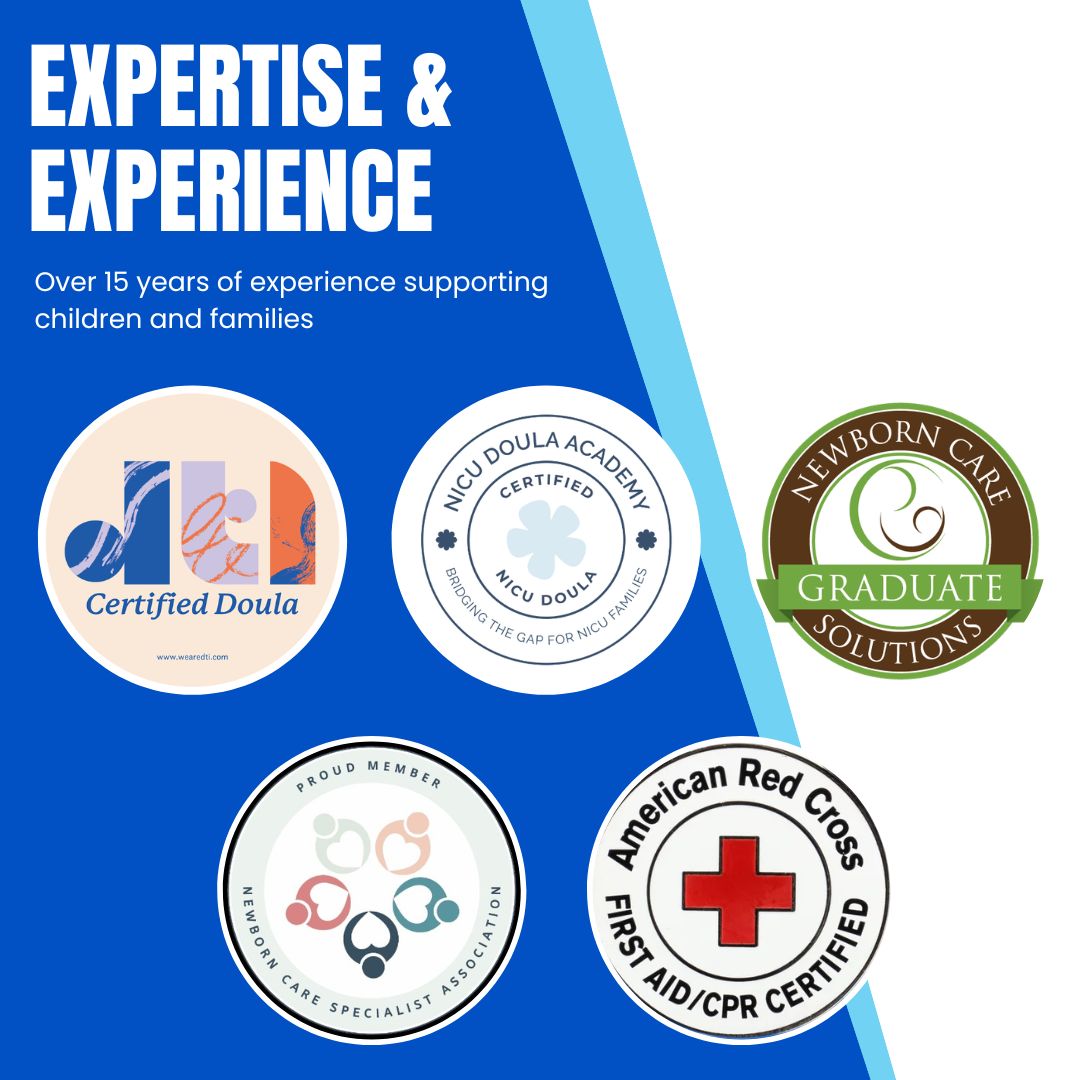
I am one of those Certified NICU Doulas, and I say that not to boast, but so you know this role is real; it is specific, and it exists because families like yours need something more targeted than general newborn support.
As a NICU doula, my practice specifically centers on medically complex babies. This means I have worked with NG tubes, G-Tubes, oral aversions, oxygen, cleft palates, and even sternal precautions. I am comfortable with DME (durable medical equipment), and I am always open to training from you or the hospital on specific tasks I am not familiar with.
You Can Train the Nanny or Newborn Care Specialist You Already Trust
If you already have a nanny or a traditional newborn care specialist you love, medical equipment does not have to take them off the table. A nurse, a NICU doula, or another qualified professional can come in and train that caregiver on the specific medical tasks involved, things like tube feeds, oxygen management, and recognizing warning signs.
Talk to your care team and see if your nanny can attend the same trainings you do in the hospital before discharge. If they can’t attend, ask if you can record the session or even just take very detailed notes and pictures for when you train your caregiver at home.
Training for tasks like feeding tubes can take time if they are not familiar with them. A good caregiver will be anxious because they care about your little one. Train in small steps at a time. I suggest you have them watch you do it 2-3 times, then have them talk you through the process, then have them do the task with you watching, then have them do the task with you checking their work. Think about all the little mistakes you made while you were learning- so giving ample time is important.
The most important thing in training is to make sure that they know you want them to ask questions or to double-check and that you do not want them to guess because they don’t want to bother you.
Bringing in a Nurse or NICU Doula as a Trainer, Not a Full-Time Hire
Hiring a nurse does not have to mean staffing every single shift. Sometimes it means bringing someone in for a short, targeted engagement specifically to train your regular caregiver.
This approach can be more sustainable for your family, both financially and in terms of consistency, than trying to staff round the clock nursing coverage. You get the expertise where you need it most, then your trusted caregiver carries the relationship forward.
When I am brought in to do this, I will help create the training materials. Then you and/or your medical team review them. Then I can do the individual training over time.
Some families bring me in during the hiring process to help them find the right candidate some find the right person then only after they are sure they have the right caregiver I provide training for the specialized care with your oversight.
Hire Before Discharge So Training Can Happen at the Hospital
Here is one of the most practical things I can tell you. If you can identify and hire your caregiver, whether that is a nanny, a doula, or someone else, before your baby is discharged, that person can come to the hospital and be trained alongside you.
Learning tube feeds, equipment, and routines in the hospital setting, with medical staff right there to answer questions and catch mistakes, is a far less stressful way to build confidence than trying to figure it all out alone at home on day one.
Even Non-Medical Caregivers Bring Something to the Table
Lived experience counts for a lot. A caregiver who has personally supported a loved one through a medical condition or complex need often already carries a baseline of comfort, calm, and situational awareness that makes training faster and easier, even without a single medical credential to their name. They are also less likely to be scared off with beeping alarms or tubes.
They might have had their own kiddos with medical issues or have overcome medical issues themselves that give them more compassion for you and the stress or discomfort your little one might be experiencing. Do not rule out someone wonderful just because their resume does not say "medical" on it. The key is to make sure that they are well trained, you trust them, and they know how important it is to be upfront if they ever make a mistake.
I know I just said this, but I am going to say it again. Trust is key! That means making sure that your communication styles work together and you create an environment where it is okay to ask lots of questions.
You Know Your Baby Best
You know your baby and your family better than anyone walking into your home to help. The support you need exists, and it can flex to match your specific situation rather than forcing you into a box that does not fit. If you need help, please reach out and I would love to support you. Even if you don’t live in the Phoenix metro area.


